In short
- Against fighters, use Basilisk or Lexington. In Tier B: Chaos, whose flak weapons hit fighters at full strength and deal almost as much as Basilisk.
- Against corvettes, use Basilisk, Lexington or Abaddon. In Tier B: Chaos.
- Against frigates, destroyers and cruisers, use Wasp: its beams deal more damage to these three classes than any other frigate.
- In Tier C, Monterey deals the same damage to every class; in Tier B, Chaos is only for fighters, corvettes and frigates.
- Beam damage is the main threat. Watch out for fleets with many beams.
- Half of the frigates fly as a single ship, and every lost ship takes its damage with it. Protect every ship.
Which frigate against which enemy
DPS is damage per second. A ship deals its attack as DPS, split between its weapons, and the DPS of a squadron is attack × living ships.
The damage of each weapon is multiplied by a number that depends on the class of the target. A weapon never picks an enemy of a class it cannot target; for beams and torpedoes, a full 6-module set or a technology can add classes (see the note under the multiplier table). The table shows what a full squadron deals to each class after that.
All numbers on this page are for a new squadron: level 1 and the lowest rank of its tier, before upgrades. Rank multiplies attack and hull. A new Tier A squadron starts at a higher rank than a new Tier D one, so it deals more and has more hull from the start; the ranks table at the end of the page shows where each tier starts and how high it can rise.
| Ship | vs Fighter | vs Corvette | vs Frigate | vs Destroyer | vs Cruiser |
|---|---|---|---|---|---|
| Basilisk | 146.5 | 128.2 | 128.2 | 36.6 | 18.3 |
| Chaos | 129.4 | 84.1 | 84.1 | 12.9 | 12.9 |
| Lexington | 119.1 | 105.2 | 105.2 | 35.6 | 21.6 |
| Identity | 107.7 | 83.2 | 123.8 | 60.2 | 52.9 |
| Abaddon | 101.6 | 88.9 | 88.9 | 25.4 | 12.7 |
| Charybdis | 77.1 | 59.1 | 59.1 | 56.5 | 69.4 |
| Oracle | 71.4 | 46.4 | 105.6 | 66.4 | 66.4 |
| Victorious | 59.0 | 38.3 | 38.3 | 64.9 | 94.4 |
| Monterey | 43.3 | 43.3 | 43.3 | 43.3 | 43.3 |
| Wasp | 17.2 | 11.2 | 139.5 | 130.0 | 130.0 |
New squadrons: level 1, the lowest rank of their tier. Squadron DPS × damage multiplier, counting only the weapons that can target the class. Not counted: abilities, the flak ricochet and the time the target is out of the ship’s weapon range. The best value in each column is highlighted.
| Target | Tier A | Tier B | Tier C | Tier D |
|---|---|---|---|---|
| Fighter | Basilisk146.5 | Chaos129.4 | Monterey43.3 | — |
| Corvette | Basilisk128.2 | Chaos84.1 | Monterey43.3 | — |
| Frigate | Wasp139.5 | Chaos84.1 | Monterey43.3 | — |
| Destroyer | Wasp130.0 | Chaos12.9 | Monterey43.3 | — |
| Cruiser | Wasp130.0 | Chaos12.9 | Monterey43.3 | — |
New squadrons: level 1, the lowest rank of their tier. The frigate of each tier with the most squadron DPS against the target. A dash: no frigate of that tier can target the class, or there is no frigate of that tier.
- Against fighters
- Use Basilisk: it deals the most (146.5). Among Tier A frigates, Lexington (119.1) comes next. Basilisk and Lexington carry missiles, which deal 0.8× damage to fighters. In Tier B: Chaos (129.4): it carries only flak weapons, and flak damage hits fighters at full strength (1.0×).
- Against corvettes
- Basilisk (128.2), Lexington (105.2) and Abaddon (88.9) deal the most. All three carry missiles, which deal 0.7× damage to corvettes. In Tier B: Chaos (84.1); flak weapons deal 0.65× damage to corvettes.
- Against frigates
- Use Wasp. Beams deal 0.83× damage to frigates, more than any other damage type; Wasp deals 139.5. Basilisk (128.2) and Identity (123.8) follow. In Tier B: Chaos (84.1).
- Against destroyers and cruisers
- Use Wasp: it deals 130.0 to both, the most of any frigate, and its beams deal 0.83× damage to both classes. Against cruisers Victorious (94.4) comes next: its torpedoes deal 1.5× damage to cruisers. In Tier C: only Monterey. It deals 43.3 to ships of every class: its turret weapons have a 0.5× multiplier against all classes.
- Beam fleets
- Watch out for them. Beams deal 0.83× damage to frigates, and almost all beams can target them. A squadron’s hull is the hull of all its ships together. For frigates it is 3,373 on average, and only cruisers have more (3,818).
- Losses
- Protect every ship. Half of the frigates fly as a single ship (Lexington, Wasp, Basilisk, Chaos, Monterey): when that ship is destroyed, the squadron is gone. Losing one of 2 ships removes 50% of squadron DPS, one of 3 removes 33.3%.
All 10 frigates
Every frigate in the player ship list as a new squadron: level 1 and the lowest rank of its tier, before modules, officers, technologies, Promotion and abilities. Speed has no label in the game; it uses the same distance units as weapon range.
| Ship | Species | Tier | Ships | Hull per ship | Attack per ship | Squadron DPS | Squadron Hull | Speed | Damage type | Share of DPS | Range |
|---|---|---|---|---|---|---|---|---|---|---|---|
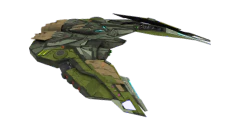 Abaddon | Morlings | Tier A | 2 | 2,141 | 63.5 | 127.0 | 4,282 | 16 | Missile | 100% | 170 |
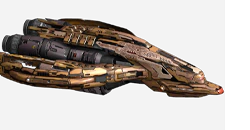 Identity | Eiens | Tier A | 3 | 1,832 | 57.1 | 171.3 | 5,495 | 15 | MissileFlakBeam | 43%29%29% | 205190190 |
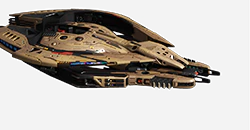 Oracle | Eiens | Tier A | 2 | 2,379 | 71.4 | 142.7 | 4,758 | 9 | FlakBeam | 50%50% | 190190 |
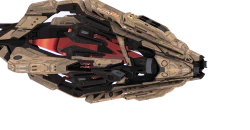 Victorious | Eiens | Tier A | 2 | 2,022 | 59.0 | 118.0 | 4,044 | 15 | TorpedoFlak | 50%50% | 250190 |
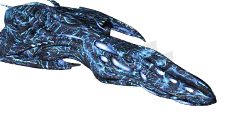 Charybdis | Endauri | Tier A | 2 | 2,379 | 64.2 | 128.5 | 4,758 | 16 | FlakTurretsTorpedo | 40%40%20% | 150175250 |
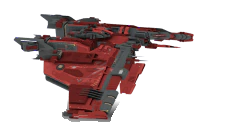 Lexington | Confederate | Tier A | 1 | 2,427 | 154.6 | 154.6 | 2,427 | 12 | MissileTurrets | 90%10% | 180170 |
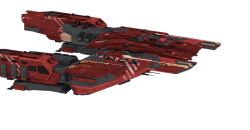 Wasp | Confederate | Tier A | 1 | 2,260 | 171.8 | 171.8 | 2,260 | 16 | BeamFlak | 90%10% | 180140 |
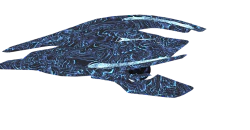 Basilisk | Endauri | Tier A | 1 | 3,212 | 183.2 | 183.2 | 3,212 | 15 | Missile | 100% | 170 |
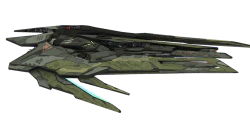 Chaos | Morlings | Tier B | 1 | 1,553 | 129.4 | 129.4 | 1,553 | 15 | Flak | 100% | 160 |
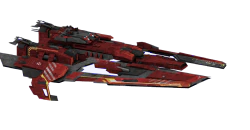 Monterey | Confederate | Tier C | 1 | 938 | 86.6 | 86.6 | 938 | 15 | Turrets | 100% | 160 |
New squadrons: level 1, the lowest rank of their tier.
Frigates next to the other classes
On average a frigate squadron deals 141.3 DPS and has 3,373 hull: less damage than fighters and corvettes but more than destroyers and cruisers, and more hull than fighters, corvettes and destroyers but less than cruisers. On average frigates are also the third fastest class, and they reach full speed in 3–6 seconds.
| Class | Ships counted | Ships in squadron | Squadron DPS | Squadron Hull | Speed | Time to full speed, s |
|---|---|---|---|---|---|---|
| Fighter | 12 | 5.33 | 254.6 | 1,697 | 22.9 | 1.0 |
| Corvette | 11 | 2.55 | 167.2 | 2,124 | 16.9 | 3.55 |
| Frigate | 10 | 1.6 | 141.3 | 3,373 | 14.4 | 5.4 |
| Destroyer | 13 | 1 | 120.5 | 2,880 | 4.0 | 8.92 |
| Cruiser | 12 | 1 | 104.7 | 3,818 | 4.45 | 8.75 |
New squadrons: level 1, the lowest rank of their tier. Flagships, drones and battle stations are not counted.
| Stat | Per ship | Per squadron | Squadron median |
|---|---|---|---|
| Ships in squadron | — | 1–3 | 2 |
| Hull | 938–3,212 | 938–5,495 | 3,628 |
| Attack (DPS) | 57.1–183.2 | 86.6–183.2 | 136.1 |
| Shield | 0 | 0 | — |
| Speed | 9–16 | — | — |
| Time to full speed | 3–6 s | — | — |
New squadrons: level 1, the lowest rank of their tier.
How they fight
- Movement
- Frigates do not all fly the same way. Oracle and Identity fly to 70–88% of their weapon range from the target and stay there nose-on, drifting only a little. If the target moves farther away, they close in again. They back away only when the enemy comes closer than 23–29% of their weapon range. All other frigates circle the target: each ship flies to random points about 55% of its weapon range away from the target and picks a new point at least every 10 seconds.
- Targets
One ship of each squadron is its lead ship. The others follow it and attack the same enemy, so the lead’s choice of target is the whole squadron’s choice. A frigate that flies alone is its own lead.
The lead ship ranks enemy classes by priority: first the class its weapons deal the most damage to after the damage multipliers, then the rest in descending order. Not every class gets on the list: if the next class would take less than half the damage of the class before it, the list ends there, and neither that class nor any class after it is on the list. For example, Wasp’s beams (90% of its DPS) deal 0.83× damage to frigates, destroyers and cruisers, but against fighters only its flak weapons (10%) count. So Wasp ranks frigates, destroyers and cruisers and leaves fighters and corvettes off its list.
The lead attacks the nearest enemy of the highest-priority class in the battle. If no class from its list is in the battle, it simply attacks the nearest enemy.
Oracle and Identity choose differently. Their lead first looks at enemies near it: those within twice its weapon range, and those close enough to fire at it themselves. It picks the enemy of the highest-priority class among them. If no enemy is near, it uses the rule above. So these two may attack a nearby enemy of a lower-priority class instead of a distant one of a higher-priority class.
Many enemy fleets that the game controls ignore class priorities in half of their target choices and simply attack the nearest ship. Their destroyers, cruisers, Scylla, Eagle, Oracle and Identity still use priorities for enemies near them. Such fleets may attack your frigates even when they have better targets.
- Blocked targets
A weapon never picks an enemy of a class it cannot target. Normally torpedoes target only destroyers and cruisers, and beams cannot target fighters or corvettes.
The weapons of your frigates follow the same rules: the torpedoes of Victorious and Charybdis normally fire only at destroyers and cruisers, and the beams of Wasp, Oracle and Identity normally skip fighters and corvettes.
Module sets and technologies can lift these limits for a squadron. A full 6-module Kaiten set or the technology Improved Launcher Arrays (fighters, corvettes and cruisers have it) lets its torpedoes target every class; a full 6-module Reflector set or the destroyer technology Amplified Beam Sensors does the same for its beams. They then deal the damage multipliers shown below. Frigates have neither technology, so your frigates need the module sets.
The fighter Flair’s ability Superiority keeps enemy beams and torpedoes off the fighters of its fleet (at its last level, off corvettes too). Some enemy weapons also normally do not target frigates: the beams of the corvette Eagle and the destroyer Enterprise, the main turret weapon of the cruiser Hornet and of the destroyer Yorktown.
- Losing ships
- Apart from flak damage and some abilities, a hit damages only one ship. A destroyed ship stops attacking, so the squadron loses its share of damage.
- Shields
Shields covers the shared rule. Shield comes only from bonuses, such as modules or the frigate technology Augmented Shield Emitters (+10% to +80% by level).
When a ship has a flat or percentage shield bonus, even only a flat one, its shield also gets a part that depends on base hull. Officer and Promotion multipliers alone give no shield. This part is base hull divided by 2.33, about 43% of the hull; 2.33 is a fixed factor of the game. Percentage shield bonuses increase this part. The flat module shield is split between the ships of the squadron and added on top. Then officer and Promotion multipliers multiply the total (see Promotion and Promotion Badges):
Shield = (flat module shield ÷ ships + base hull ÷ 2.33 × (1 + shield % bonuses)) × officer and Promotion multipliers
Base hull here is hull after level and rank, before hull bonuses. Example: a new Basilisk has 3,212 hull; with +80% shield bonuses its shield is 3,212 ÷ 2.33 × 1.8, about 2,481. That is about 77% of its hull: 43% × 1.8.
Shield regenerates 0.5% of its starting value per second (Charybdis 0.8%).
What hurts frigates
Each damage type has its own multiplier against each class of target. These are the multipliers before other effects.
| Target | Flak | Missile | Turrets | Beam | Torpedo |
|---|---|---|---|---|---|
| Fighter | 1.0 | 0.8 | 0.5 | 0.33, cannot normally target this class | 0.2, cannot normally target this class |
| Corvette | 0.65 | 0.7 | 0.5 | 0.33, cannot normally target this class | 0.2, cannot normally target this class |
| Frigate | 0.65 | 0.7 | 0.5 | 0.83 | 0.2, cannot normally target this class |
| Destroyer | 0.1 | 0.2 | 0.5 | 0.83 | 1.0 |
| Cruiser | 0.1 | 0.1 | 0.5 | 0.83 | 1.5 |
* This damage type cannot normally target this class. The number applies only when modules or a technology allow such an attack. Such technologies: Improved Launcher Arrays (torpedoes; fighters, corvettes and cruisers have it) and Amplified Beam Sensors (beams; destroyers have it).
- Damage rules
- Damage types and armor penetration
- Beam
- The main threat. Beams deal 0.83× damage to frigates, more than any other damage type, and almost all beams can target frigates.
- Missile
- Missiles deal 0.7×, the second-highest multiplier against frigates.
- Flak
- Each hit deals 0.65× damage to the ship it hits. The damage also ricochets: other living ships of the same squadron, at most 2, each take 20% of that hit’s damage. A frigate that flies alone takes no ricochet. In a squadron of 2 ships the second ship takes another 20%, so the squadron takes up to 1.2× the damage of one hit in total. Identity, the only frigate with 3 ships, takes up to 1.4× (1 + 0.2 + 0.2). Ability effects are not counted here.
- Torpedo
- Enemy torpedoes normally cannot target frigates. They can only if the enemy squadron carries a full 6-module Kaiten set or has the technology Improved Launcher Arrays, which fighters, corvettes and cruisers can have. Even then they deal only 0.2×. Flair’s ability Superiority does not protect frigates from them.
Upgrades that matter
Rank multiplies attack and hull by the same factor for every ship. Each tier has its own range of ranks: the numbers on this page are for the lowest one, and a squadron of that tier cannot rise above the highest. Each rank has its own highest level.
| Tier | Lowest rank | Multiplier | Highest level | Highest rank | Multiplier | Highest level |
|---|---|---|---|---|---|---|
| Tier A | Strange ★ | ×2.379 | 120 | Singular ★★★★★ | ×3.543 | 500 |
| Tier B | Rare ★ | ×1.725 | 60 | Strange ★★ | ×2.521 | 160 |
| Tier C | Standard ★ | ×1.25 | 40 | Rare ★★ | ×1.898 | 80 |
| Tier D | Common ★ | ×1 | 30 | Standard ★ | ×1.25 | 40 |
Level 1 adds nothing; every higher level multiplies attack and hull again.
- Level and rank
- Level and rank multiply attack and hull by the same factor for every ship, so ships of the same tier at equal level and rank keep their order in the tables. Only neighbouring tiers share ranks; the tables show every ship as a new squadron, at the lowest rank of its tier. A new Tier A frigate starts at Strange ★, Chaos (Tier B) at Rare ★ and Monterey (Tier C) at Standard ★.
- Promotion
- Only Singular squadrons can be promoted; among Tier A–D only Tier A squadrons become Singular. Singular squadrons are Tier A squadrons at one of the five highest ranks a Tier A squadron can reach. Promotion multiplies attack, hull and shield by a separate ×1.06 to ×2.0. Chaos (Tier B) and Monterey (Tier C) can never be promoted.
- Dimension Shifting
- With this frigate technology, your frigates start the battle with Invulnerability: for 3 to 15 seconds, by level, enemy hits deal them no damage.
- Augmented Shield Emitters
- At its top level (+80%) this technology alone gives a shield of base hull ÷ 2.33 × 1.8, about 77% of base hull (a new Basilisk: about 2,481).
- Advanced Emission Coils
- This frigate technology increases beam damage by up to 36%. Wasp, Oracle and Identity carry beams.
- High-Yield Warheads
- Two frigate technologies have this name. Each increases missile damage by up to 18%, 36% together. Basilisk, Abaddon, Lexington and Identity carry missiles.
- Modules
- A flat module bonus to attack, hull or shield is split between all ships of the squadron: a frigate that flies alone gets all of it, each ship of Identity a third. A percentage bonus applies in full to each ship.
New squadrons: level 1, the lowest rank of their tier, no upgrades. Game version 1.46.2.
Found a mistake or something missing? Tell us